Hot rods

Almost as soon as cars were invented people have been trying to make them better and faster. And sometime in the 50’s a car culture developed using the cheaper cars of the past (it was a matter of middle-class pride to only own the newest model cars) and modifying these heaps for style and speed.
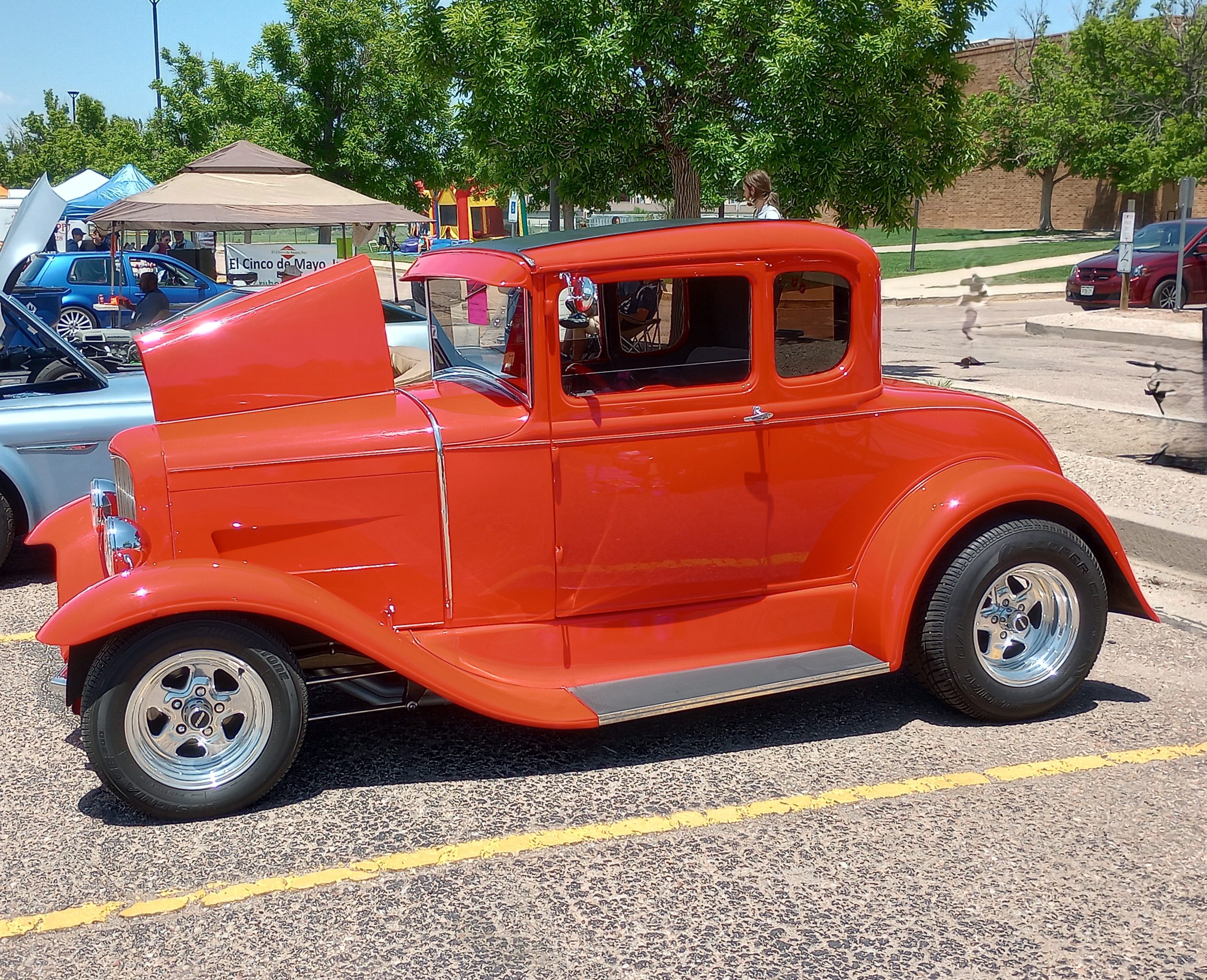
This car is the sort of thing they started out with, the raw material for a hot (fast) rod. This one has been restored above it’s original finish, you had a choice of black or possibly dark green, automotive paint was pretty primitive (and they never dreamed that people would like other colors). And no one could imagine spending good money to fix up and race an old car (except mechanics).

This car was spotted in the wild, parked in front of an old-fashioned diner. They kept most of the original body, replaced the axles and did some sort of enhancement to the engine so that this could actually be raced. I’m sure in time it will sport new paint.

This one is a show car, a rich person’s toy, perhaps the owner had one such as this when they were a youngster (or possibly their dad did). It’s been beautifully restored, with different axles and modern engine upgrades. The owners had driven it to the show, so the car is still roadworthy.

But this was the funky show beast with the most clever adaptation of an unlikely choice. I admire that it’s a one-of-a-kind work in progress. It’s a 1930’s International Harvester pickup truck that has been stripped, chopped, (they cut the cab apart and lowered the roof) dropped and has a possible turbocharger added. It appears to have been abandoned for a number of years, before being resurrected by this mechanic. All the owner needs is time and money (lots of), this vehicle already has had lots of love added.

Urban Decay

It is inevitable that nothing lasts forever. Even the symbol of the country, the White House, was once burnt to the ground (and then rebuilt in an identical form). Most cities go through cycles of building, redundancy, and perhaps rebirth. And I am from a city that has mostly fallen into decay, and I love to explore these outliers that resist the forces of change.

This particular chain was once part of every downtown (and downtown was the place to shop). The company started in 1879 as a five and ten cent store (precursor to today’s dollar stores). I loved to shop (mostly just looking, I had no money) at these when I was small. But, this sort of business became obsolete years ago and now it sits vacant, with the ghost lettering to show that it was once part of an urban center.

These fine brick storefronts are no longer pillars of commerce. The building at the end claims to feature “Vegas Showgirls”, however this is a dubious claim at best.

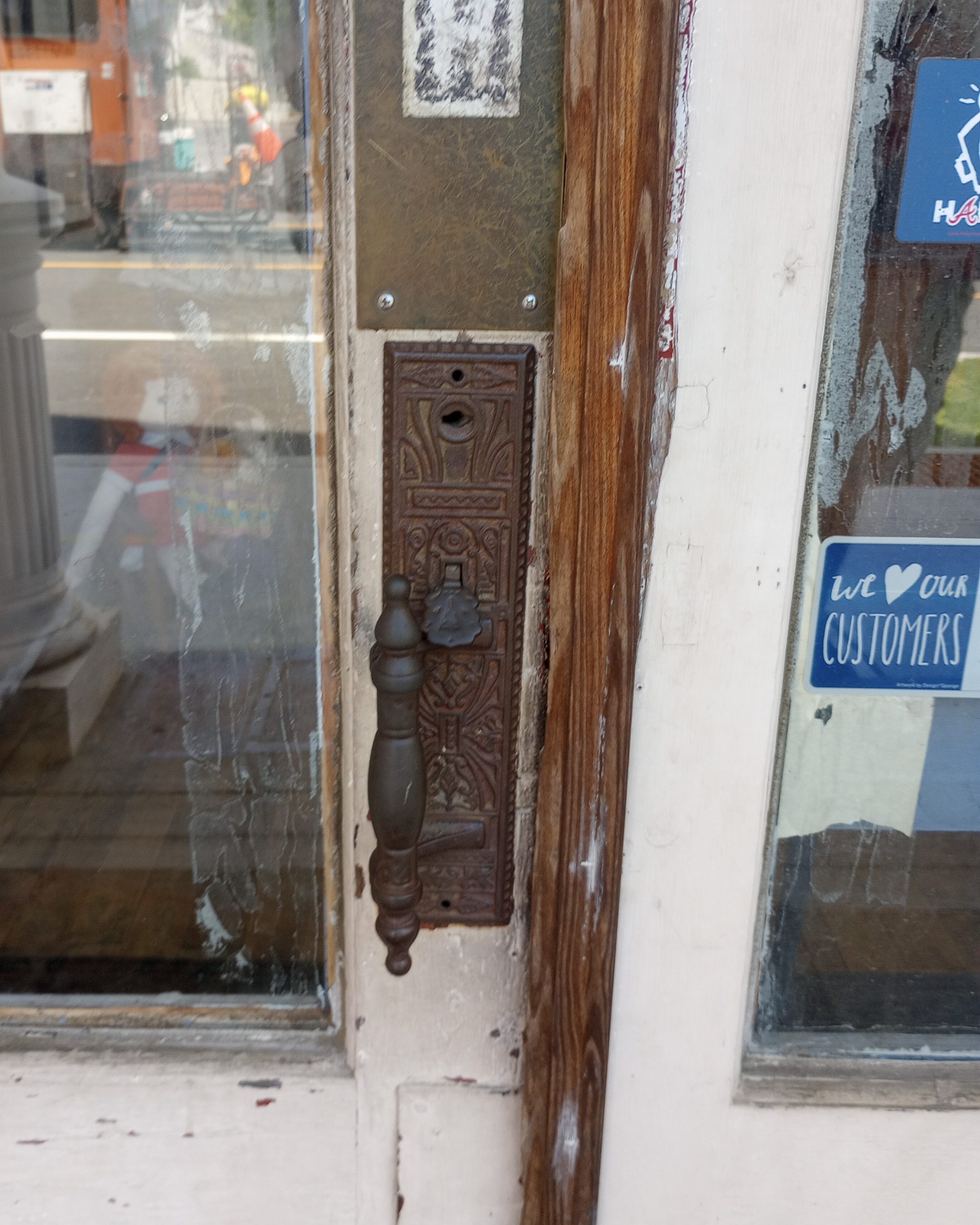
This ornate door handle hints that this building was once the pride of it’s owners, however, it also shows the negligence of time. It probably had some sort of gilt finish that has since weathered away.

The building also has these lovely cast iron details that have survived paint. rust and time. Again, someone spent some money to make this building special. And it was originally conceived as a local grocery in 1879, and is still a family owned deli, marooned by time and circumstances.

Inside is slowly edging toward rack and ruin, which is paradoxically part of it’s charm. Why do I love this state of being? Because I grew up in such an atmosphere, where things were old and slightly shabby. It is part of the conundrum of gentrification (which has taken place where I live), if everything was fixed up and modernized, this business could not afford to exist. The interior would feature reproductions of the period details and it would be a clone of whatever the current trend is. But I think I have had my fill of nostalgia here, and instead I look forward to the new in the future. Perhaps this place shall hold on until modernization or it may be steamrollered into oblivion. Perhaps the future will include a reproduction of the original, spiffed up for the nostalgia of future generations, hungry for an imagined past.